The Future Perfect Progressive Tense, also known as the Future Perfect Continuous Tense, is used to describe an action that will continue up to a specific point in the future. It can also be used to explain the reason or cause of a future action.
This tense is formed using:
will + have + been + verb-ing
⚠️ Note: This tense is similar to the Future Perfect Tense, but it emphasizes the duration of the action rather than just its completion.
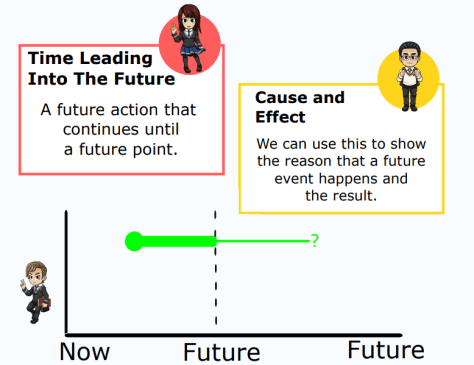
Future Perfect Progressive Tense Examples
Here are some clear examples of the Future Perfect Progressive Tense:
- On June 3rd, I will have been studying Japanese for 3 years.
- I will probably have been sleeping for a few hours by then.
- My sister will have been running for 3 hours by the end of the marathon.
- Come Monday, I will have been exercising every day for a year and I’m going to check the results.
How to Practice the Future Perfect Progressive Tense
Try creating your own sentences using these patterns:
- This year, I will have been ___________ for __________.
- I will have been ______ by ______________.
- My friend will have been _________ by _________.
- _______ will have been ___________.
Practicing these templates will help you master the duration and usage of future actions in English.
Frequently Asked Questions About Future Perfect Progressive Tense
Q: What is the Future Perfect Progressive Tense used for?
It is used to describe an action that will be ongoing up to a specific future point, often showing how long the action will last.
Q: How is the Future Perfect Progressive different from the Future Perfect Tense?
Future Perfect emphasizes completion of an action (e.g., I will have finished the project), whereas Future Perfect Progressive emphasizes duration (e.g., I will have been working on the project for 3 hours).
Q: How do you form the Future Perfect Progressive Tense?
Use will + have + been + verb-ing. Example: She will have been studying for 2 hours by the time I arrive.
Q: Can you use this tense to talk about reasons for actions?
Yes, it can explain the cause or reason for a future action, often in combination with time expressions like by then, by the end of, or for [duration].
Final Thoughts
The Future Perfect Progressive Tense is perfect for emphasizing the length of a future action and understanding the timeline of events. By practicing with examples and sentence templates, you can improve both your speaking and writing skills in English.
Don’t forget to check the Grammar Page for more lessons on English tenses.